Carbohydrates are the body’s primary source of energy, supplying the fuel required for nearly every cellular process. From powering brain function and muscle contraction to supporting biosynthesis and maintaining blood glucose levels, carbohydrates play an essential role in human health.
However, the body cannot use dietary carbohydrates directly. They must first be digested, absorbed, transported into cells, and converted into usable energy through a series of highly coordinated biochemical reactions. This entire process is known as carbohydrate metabolism.
Carbohydrate metabolism refers to the complete network of metabolic pathways involved in the digestion, absorption, transport, storage, breakdown, and synthesis of carbohydrates.
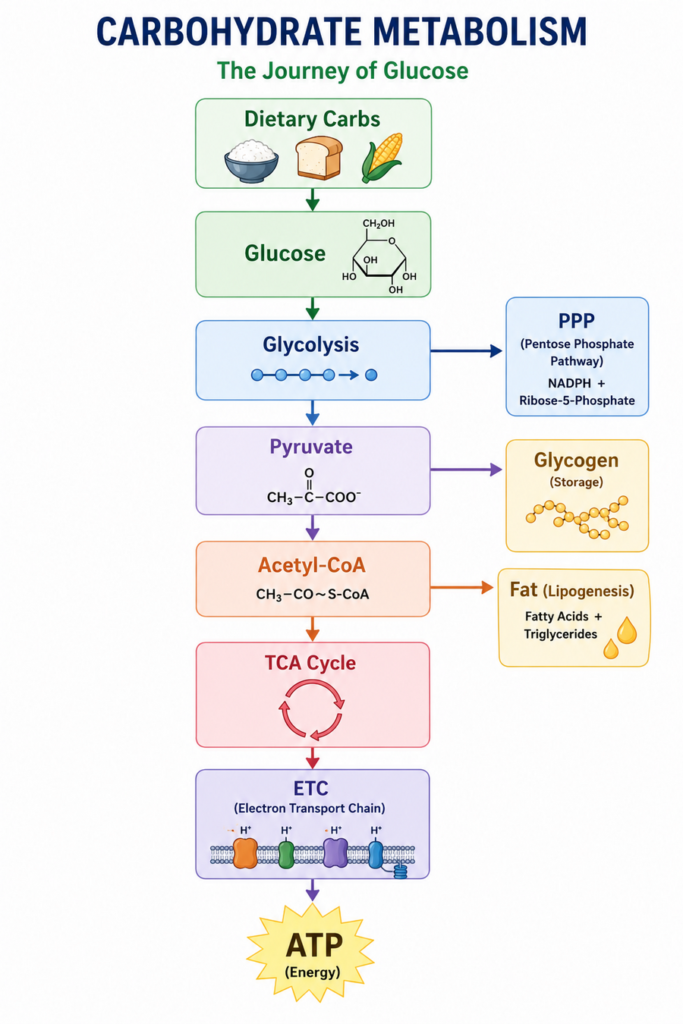
These pathways enable the body to convert glucose into adenosine triphosphate (ATP), store excess glucose as glycogen, produce new glucose during fasting, and generate essential molecules required for various cellular activities.
Because glucose serves as the primary fuel for the brain, red blood cells, and many other tissues, carbohydrate metabolism is one of the most fundamental topics in biochemistry, physiology, medicine, and nutrition.
From the moment you eat a piece of bread, a complex, invisible sequence of chemical reactions is triggered inside your body.
That food must be broken down, converted into cellular fuel, and distributed to trillions of cells to keep you alive. This microscopic process is the focus of carbohydrate metabolism biochemistry.
What Is Carbohydrate Metabolism?
What is carbohydrate metabolism? In biochemistry, it is defined as the complete series of chemical reactions used by the body to break down carbohydrates into usable energy (ATP), store excess glucose for future use, and manufacture new glucose when reserves run low.
If you are looking for an easy explanation of carbohydrate metabolism in humans, think of it as a highly organized shipping and logistics network.
The body receives raw materials (food), breaks them down into universal shipping pallets (glucose), and either burns them for fuel, stores them in warehouses (glycogen/fat), or uses them to build new products (nucleotides).
Why Is Carbohydrate Metabolism Important?
Glucose is the primary fuel for the human brain and red blood cells. Understanding carbohydrate metabolism in humans is essential because it forms the foundation of metabolic integration—how carbs, fats, and proteins interact. Without this pathway, cells cannot survive, grow, or divide.
Objectives of Carbohydrate Metabolism
The metabolism of carbohydrates has three primary objectives:
- Energy Production (ATP): To provide immediate cellular energy via catabolism.
- Energy Storage: To convert excess glucose into glycogen (short-term) or fat (long-term) via anabolism.
- Providing Building Blocks: To supply carbon skeletons for synthesizing other biomolecules (like nucleotides and amino acids).
Overview Flowchart of Carbohydrate Metabolism
Before Glucose Enters Cells
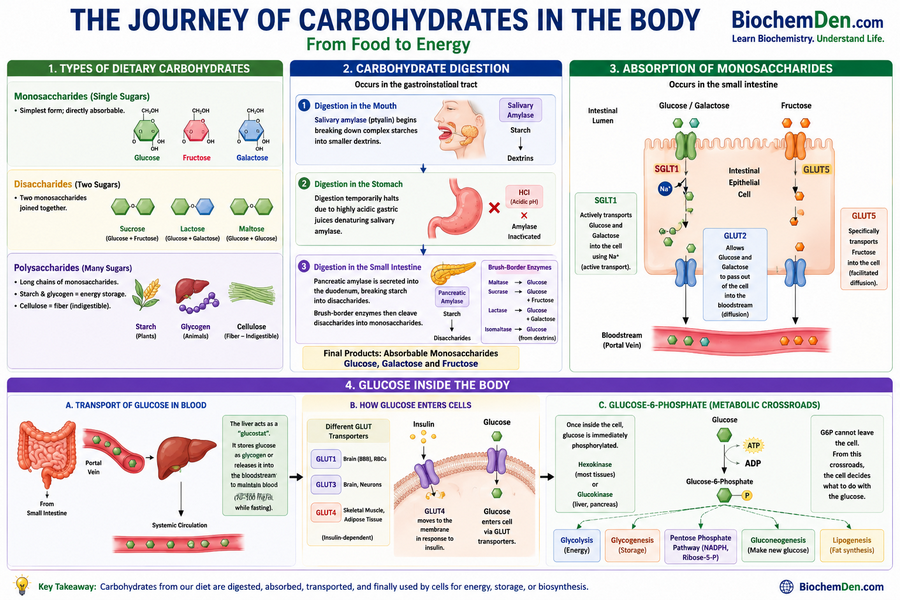
Types of Dietary Carbohydrates
Before the body can metabolize anything, we must eat. Dietary carbohydrates consist of:
- Monosaccharides: Glucose, fructose, galactose.
- Disaccharides: Sucrose (glucose+fructose), Lactose (glucose+galactose), and Maltose (glucose+glucose).
- Polysaccharides: Starch (plants), Glycogen (animals), Cellulose (fiber – indigestible).
Carbohydrate Digestion
The carbohydrate metabolic pathway actually begins in the gastrointestinal tract.
- Digestion in the Mouth: Salivary amylase begins breaking down complex starches into smaller dextrins.
- Digestion in the Stomach: Digestion temporarily halts due to highly acidic gastric juices denaturing salivary amylase.
- Digestion in the Small Intestine: Pancreatic Amylase is secreted into the duodenum, finishing the breakdown of starch into disaccharides. Brush-border enzymes (Maltase, Sucrase, Lactase, isomaltase) then cleave disaccharides into absorbable monosaccharides.
Absorption of Monosaccharides
The final single sugars are absorbed across the intestinal epithelium via specific transporter proteins:
- SGLT1: Actively transports glucose and galactose into the cell (using Na+ energy).
- GLUT2: Allows glucose and galactose to pass out of the cell into the bloodstream.
- GLUT5: Specifically transports fructose into the cell (via facilitated diffusion).
Glucose Inside the Body
- Transport of Glucose in Blood: Once absorbed, glucose enters the portal vein and travels to the liver. The liver acts as a “glucostat,” either storing it or releasing it into the systemic circulation to maintain strict blood glucose regulation (typically 70-100 mg/dL while fasting).
- How Glucose Enters Cells: Cells cannot use blood glucose until it crosses the lipid bilayer. This relies on GLUT transporters. While the brain uses insulin-independent GLUT1/3, skeletal muscle and fat rely on GLUT4, which requires the hormone Insulin to move from inside the cell to the membrane.
- Glucose-6-Phosphate (Metabolic Crossroads): Once inside the cell, glucose is immediately phosphorylated by Hexokinase (or Glucokinase in the liver) to become Glucose-6-Phosphate (G6P). This is a crucial trap—G6P cannot leave the cell. From this crossroads, the cell must decide what to do with the glucose.
Major Pathways of Carbohydrate Metabolism
Before diving into the details, here is a summary table of the pathways of carbohydrate metabolism and their primary roles:
| Pathway | Function | Location | End Product(s) |
|---|---|---|---|
| Glycolysis | Glucose breakdown for quick ATP | Cytosol | Pyruvate, ATP, NADH |
| Pyruvate Oxidation | Converts pyruvate to Acetyl-CoA | Mitochondria | Acetyl-CoA, CO₂, NADH |
| Citric Acid Cycle | Oxidizes Acetyl-CoA | Mitochondria | NADH, FADH₂, GTP, CO₂ |
| Oxidative Phosphorylation | Bulk ATP synthesis | Inner mitochondrial membrane | ATP, H₂O |
| Glycogenesis | Glycogen storage | Liver & Muscle | Glycogen |
| Glycogenolysis | Glycogen breakdown | Liver & Muscle | Glucose-6-Phosphate |
| Gluconeogenesis | New glucose synthesis | Liver & Kidney | Glucose |
| Pentose Phosphate Pathway | Produces NADPH & Ribose | Cytosol | NADPH, Ribose-5-P |
Energy Production (Carbohydrate Catabolism)
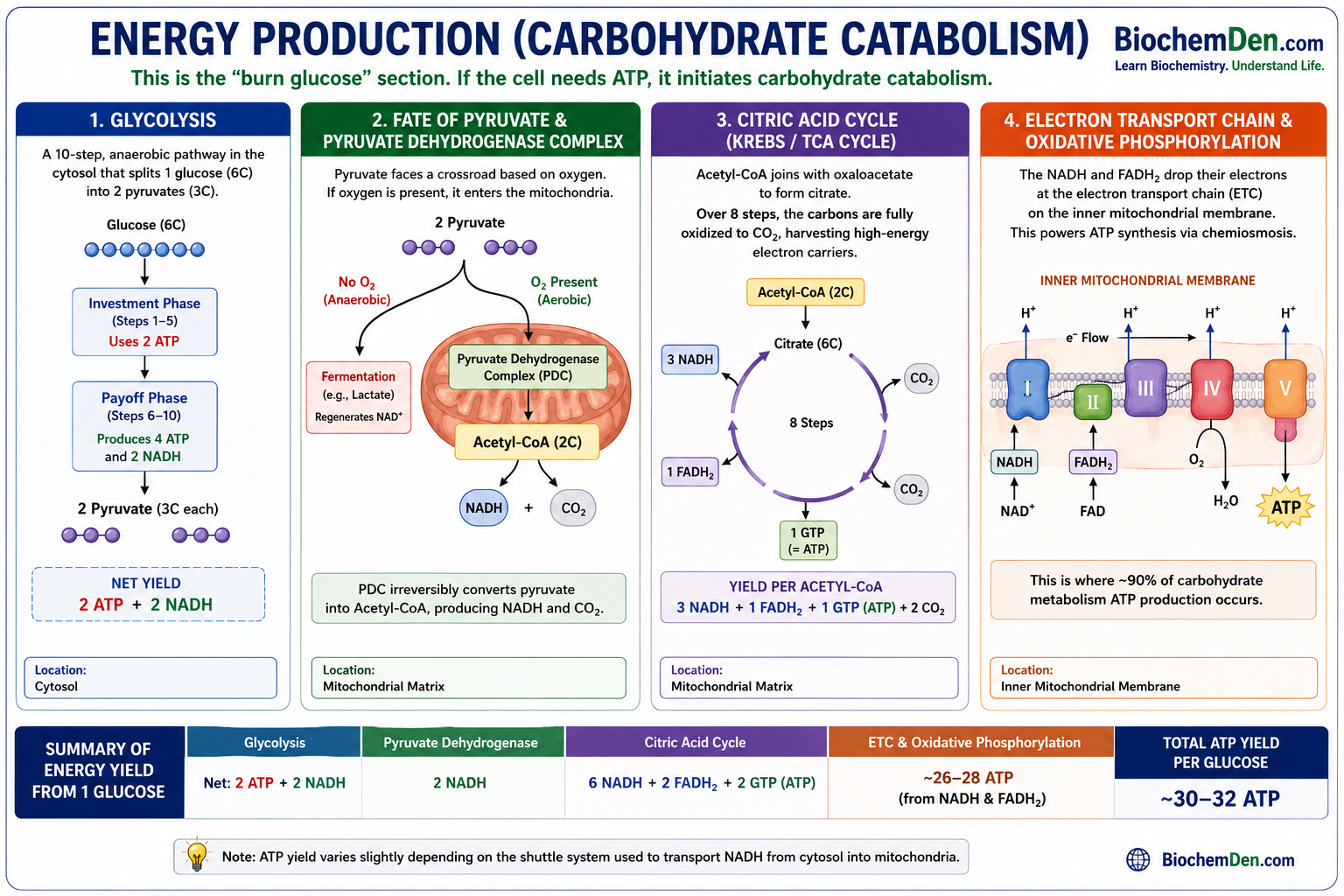
This is the “burn glucose” section. If the cell needs ATP, it initiates carbohydrate catabolism.
1. Glycolysis
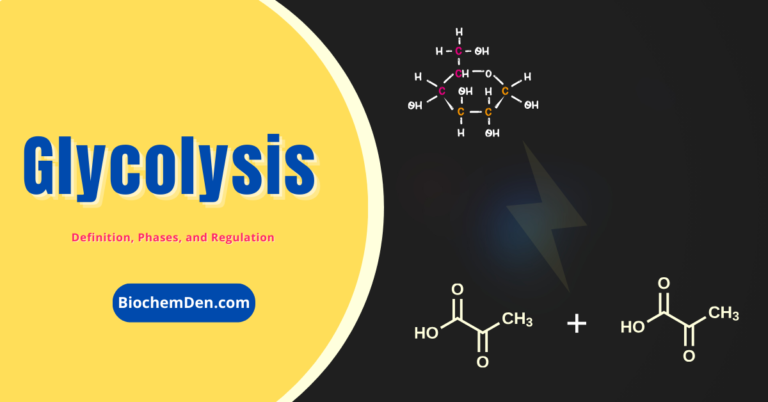
Glycolysis is a 10-step, anaerobic pathway in the cytosol that splits 1 glucose (6C) into 2 Pyruvate (3C). It has an investment phase (spends 2 ATP) and a Payoff Phase (produces 4 ATP and 2 NADH). Net yield: 2 ATP, 2 NADH.
📚 Deep Dive: Glycolysis: The Energy-Producing Metabolic Pathway and its Regulation
2. Fate of Pyruvate & Pyruvate Dehydrogenase Complex
Pyruvate faces a crossroad based on oxygen. If oxygen is present, it enters the mitochondria. The Pyruvate Dehydrogenase Complex (PDC) irreversibly converts pyruvate into Acetyl-CoA, producing NADH and CO₂..
📚 Deep Dive: Pyruvate Dehydrogenase: Exploring the Complex and Its Regulation
3. Citric Acid Cycle (Krebs/TCA Cycle)
Acetyl-CoA joins with Oxaloacetate to form Citrate. Over 8 steps, the carbons are fully oxidized to CO2, harvesting high-energy electron carriers: 3 NADH, 1 FADH2, 1 GTP per Acetyl-CoA.
📚 Deep Dive: Krebs Cycle / Citric Acid Cycle / TCA Cycle with Steps and Diagram
4. Electron Transport Chain & Oxidative Phosphorylation
The NADH and FADH₂ from the previous pathways drop their electrons at the Electron transport chain (ETC) on the inner mitochondrial membrane. This powers ATP synthesis via chemiosmosis. This is where 90% of carbohydrate metabolism ATP production occurs.
📚 Deep Dive: Electron Transport Chain | Oxidative Phosphorylation: Steps, Location, ATP Yield
5. ATP Yield from One Glucose Molecule
Using modern P/O ratios (1 NADH = ~2.5 ATP, 1 FADH₂ = ~1.5 ATP), the stages of carbohydrate metabolism yield:
| Stage | Net ATP/GTP | NADH | FADH2 | Total ATP |
|---|---|---|---|---|
| Glycolysis | 2 | 2 (cytosolic) | 0 | 5 – 7* |
| Pyruvate to Acetyl-CoA | 0 | 2 | 0 | 5 |
| Krebs Cycle (x2) | 2 | 6 | 2 | 20 |
| Total | 4 | 10 | 2 | 30 – 32 ATP |
*Depends on the cytosolic shuttle system used (malate-aspartate vs. glycerol-3-phosphate).
Storage and Glucose Homeostasis
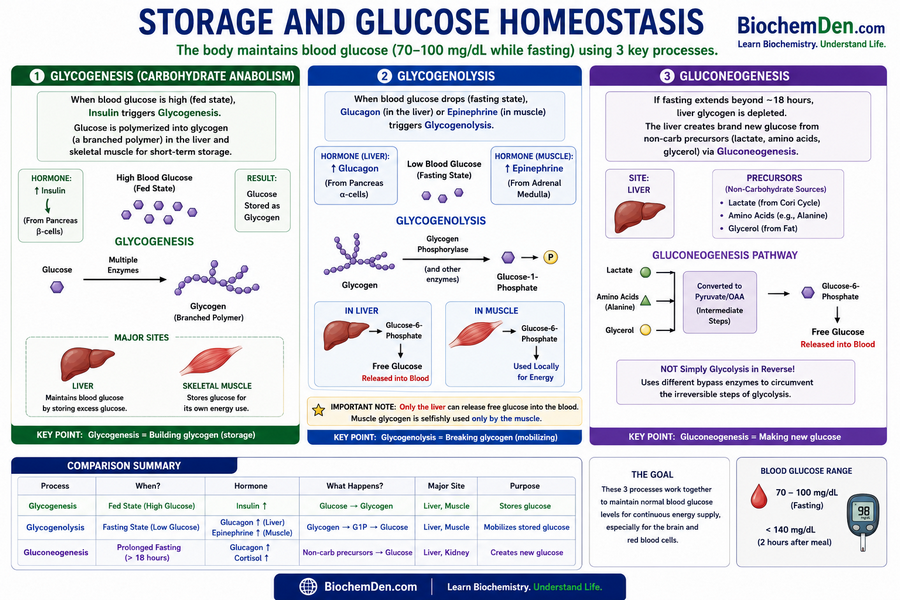
1. Glycogenesis (Carbohydrate Anabolism)
When blood glucose is high (fed state), Insulin triggers Glycogenesis. Glucose is polymerized into glycogen (a branched polymer) in the liver and skeletal muscle for short-term storage.
2. Glycogenolysis
When blood glucose drops (fasting state), Glucagon (in the liver) or Epinephrine (in muscle) triggers Glycogenolysis. Glycogen is cleaved back into Glucose-1-Phosphate. Note: Only the liver can release free glucose into the blood; muscle glycogen is selfishly used only by the muscle.
📚 Deep Dive: Glycogenolysis: How Glycogen is Utilizing in Animals
3. Gluconeogenesis
If fasting extends beyond 18 hours, liver glycogen is depleted. The liver creates brand new glucose from non-carb precursors (lactate, amino acids, and glycerol) via Gluconeogenesis. It is not simply glycolysis in reverse; it uses different bypass enzymes.
📚 Deep Dive: What is Gluconeogenesis? Steps and importance
Alternative Pathways
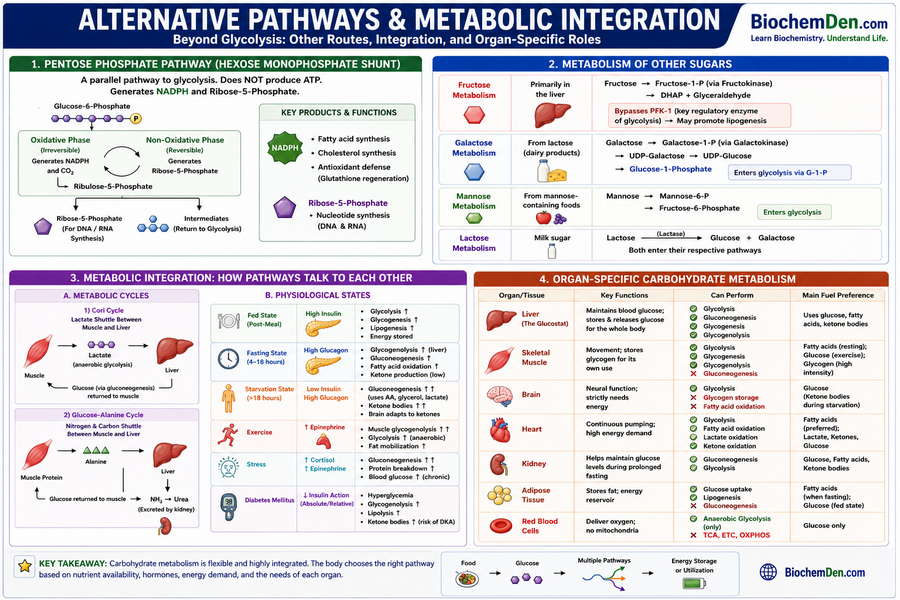
1. Pentose Phosphate Pathway (Hexose Monophosphate Shunt)
This parallel pathway does not produce ATP. Instead, it generates NADPH (crucial for fat synthesis and antioxidant defense) and Ribose-5-Phosphate (for DNA/RNA synthesis).
📚 Deep Dive: What is the Pentose Phosphate Pathway and its Significance?
2. Metabolism of Other Sugars
- Fructose Metabolism: Primarily in the liver; can bypass PFK-1 (the main regulatory enzyme of glycolysis), potentially contributing to lipogenesis.
- Galactose Metabolism: Converted to Glucose-1-Phosphate to enter the glycolytic pathway.
- Mannose Metabolism: Converted to Fructose-6-Phosphate.
- Lactose Metabolism: Broken down into glucose and galactose by lactase.
3. Metabolic Integration
This section covers how pathways talk to each other during different physiological states.
- Cori Cycle: Lactate produced by exercising muscles travels to the liver, is converted back to glucose via gluconeogenesis, and is returned to the muscles.
- Glucose-Alanine Cycle: Muscle protein is broken down into alanine, sent to the liver to make new glucose, and the nitrogen is excreted as urea.
- Fed State: High insulin. Glycolysis, glycogenesis, and lipogenesis are active.
- Fasting: High glucagon. Glycogenolysis and gluconeogenesis are active; fats are burned.
- Starvation: Liver gluconeogenesis uses muscle protein and glycerol; the brain adapts to use ketone bodies.
- Exercise: Epinephrine rapidly triggers muscle glycogenolysis for immediate ATP.
- Stress: Cortisol promotes chronic gluconeogenesis, raising blood sugar over time.
- Diabetes: Lack of insulin action leads to chronic hyperglycemia, increased lipolysis, and ketone body production.
4. Organ-Specific Carbohydrate Metabolism
Different organs have different metabolic preferences:
- Liver: The glucostat. Can do glycolysis, gluconeogenesis, glycogenesis, and glycogenolysis. Stores glycogen for the whole body.
- Skeletal Muscle: Relies on resting fatty acids and exercising glycogen. Cannot do gluconeogenesis.
- Brain: Strictly dependent on glucose (and ketones during starvation). Cannot use fatty acids.
- Heart: Prefers fatty acids as a primary fuel, but will readily use lactate and ketones.
- Kidney: Secondary site for gluconeogenesis during prolonged fasting.
- Adipose Tissue: Takes up glucose for de novo lipogenesis (fat storage) under insulin control.
- Red Blood Cells: Completely reliant on anaerobic glycolysis (no mitochondria!).
Regulation of Carbohydrate Metabolism
Hormonal regulation of carbohydrate metabolism dictates which pathways run.
| Hormone | Blood Glucose | Glycolysis | Glycogenesis | Gluconeogenesis |
|---|---|---|---|---|
| Insulin | Decreases | Stimulates | Stimulates | Inhibits |
| Glucagon | Increases | Inhibits | Inhibits | Stimulates |
| Epinephrine | Increases | Stimulates (muscle) | Inhibits | Stimulates (liver) |
| Cortisol | Increases | Inhibits | Inhibits | Stimulates |
| Thyroid Hormones | Variable | Stimulates | Inhibits | Stimulates |
📚 Deep Dive: Insulin: The Key Hormone | Glucagon: The Hormone that Regulates Blood Sugar
Disorders of Carbohydrate Metabolism
When carbohydrate metabolic pathways fail, clinical disease occurs:
- Diabetes Mellitus: Insulin deficiency/resistance leading to chronic hyperglycemia.
- Hypoglycemia: Abnormally low blood sugar (often from excess insulin).
- Hyperglycemia: High blood sugar.
- Glycogen Storage Diseases (GSDs): Genetic deficiencies in enzymes like Glycogen Synthase or Debranching Enzyme.
- Galactosemia: Inability to metabolize galactose (leads to cataracts, liver damage).
- Hereditary Fructose Intolerance: Deficiency in Aldolase B causing severe hypoglycemia and liver toxicity upon fructose ingestion.
- G6PD Deficiency: A defect in the pentose phosphate pathway causing red blood cell hemolysis upon oxidative stress.
- Pyruvate Dehydrogenase Deficiency: Causes lactic acidosis and severe neurological issues.
Laboratory Diagnosis
Biochemists assess carbohydrate metabolism clinically using:
- Fasting Blood Glucose: Direct measurement.
- HbA1c: Measures average blood sugar over the last 3 months (glycated hemoglobin).
- Oral Glucose Tolerance Test (OGTT): Measures how quickly glucose is cleared from the blood.
- Urine Glucose: Normally absent; indicates blood glucose exceeded the renal threshold (~180 mg/dL).
- Blood Lactate: Elevated in hypoxia or PDC deficiency.
- G6PD Test: Fluorescent spot test to diagnose PPP deficiency.
Clinical Applications
- Diabetes Management: Targeting the GLUT4 pathway and hepatic glucose output.
- Obesity: Managing excess lipogenesis from carbohydrates.
- Sports Nutrition: “Carb-loading” to maximize muscle glycogen before endurance events.
- Critical Care: Tight glycemic control in ICU patients to improve outcomes.
- Pregnancy: Gestational diabetes management.
- Neonatal Metabolism: Monitoring for hypoglycemia in newborns.
- Cancer Metabolism: The Warburg Effect (cancer cells heavily relying on aerobic glycolysis even in the presence of oxygen).
Comparison Tables (Featured Snippet Targets)
Glycolysis vs Gluconeogenesis
| Feature | Glycolysis | Gluconeogenesis |
|---|---|---|
| Purpose | Glucose breakdown | Glucose synthesis |
| Location | Cytosol | Cytosol, Mitochondria, ER |
| Energy | Produces 2 ATP (net) | Consumes 6 ATP (net) |
| Key Enzymes | Hexokinase, PFK-1, Pyruvate Kinase | Glucose-6-Phosphatase, PEPCK, Fructose-1,6-Bisphosphatase |
Glycogenesis vs Glycogenolysis
| Feature | Glycogenesis | Glycogenolysis |
|---|---|---|
| State | Fed | Fasting |
| Hormone | Insulin | Glucagon / Epinephrine |
| Key Enzyme | Glycogen Synthase | Glycogen Phosphorylase |
| Product | Glycogen | Glucose-1-Phosphate |
Hexokinase vs Glucokinase
| Feature | Hexokinase | Glucokinase |
|---|---|---|
| Location | Most tissues | Liver & Pancreatic Beta-cells |
| Km (Affinity) | Low (high affinity) | High (low affinity) |
| Vmax | Low | High |
| Inhibition | Product inhibited by G6P | Not inhibited by G6P |
Memory Tricks and Exam Notes of Carbohydrate Metabolism
1. Mnemonics
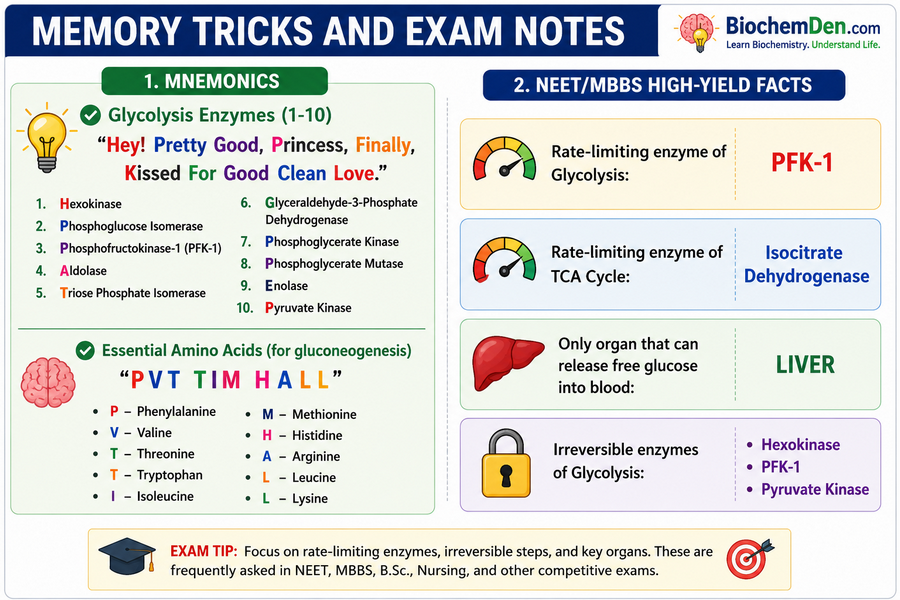
- Glycolysis Enzymes (1-10): “Hey! Pretty Good, Princess, Finally Kissed For Good Clean Love.” (Hexokinase, Phosphoglucose Isomerase, PFK-1, Aldolase, Triose Phosphate Isomerase, Glyceraldehyde-3-P DH, Phosphoglycerate Kinase, Phosphoglycerate Mutase, Enolase, Pyruvate Kinase).
- Essential Amino Acids (for gluconeogenesis): “PVT TIM HALL” (Phenylalanine, Valine, Threonine, Tryptophan, Isoleucine, Methionine, Histidine, Arginine, Leucine, and Lysine).
2. NEET/MBBS High-Yield Facts
- Rate-limiting enzyme of glycolysis: PFK-1.
- Rate-limiting enzyme of the TCA Cycle: Isocitrate dehydrogenase.
- Only organ that can release free glucose into the blood: the liver.
- Irreversible enzymes of Glycolysis: Hexokinase, PFK-1, Pyruvate Kinase.
3. One-Page Revision Sheet
Frequently Asked Questions (FAQs)
What is carbohydrate metabolism?
Carbohydrate metabolism is the sum of all chemical reactions involved in the breakdown of dietary carbs into glucose, the conversion of glucose into energy (ATP), the storage of excess glucose as glycogen or fat, and the synthesis of new glucose from non-carbohydrate sources.
What are the major pathways of carbohydrate metabolism?
The major carbohydrate metabolism pathways include Glycolysis, the Citric Acid Cycle, oxidative phosphorylation, Glycogenesis, Glycogenolysis, Gluconeogenesis, and the Pentose Phosphate Pathway.
Which organ regulates blood glucose?
The liver is the primary organ that regulates blood glucose. It acts as a glucostat by taking up glucose after a meal (glycogenesis) and releasing it during fasting (glycogenolysis and gluconeogenesis). The pancreas aids this by secreting insulin and glucagon.
How much ATP is produced from one glucose molecule?
The complete oxidation of one glucose molecule yields approximately 30 to 32 ATP. This includes 2 ATP from glycolysis, 2 GTP from the TCA cycle, and roughly 26-28 ATP from the electron transport chain driven by NADH and FADH₂..
What is the difference between glycogenesis and glycogenolysis?
Glycogenesis is the anabolic process of synthesizing glycogen from glucose for storage, stimulated by insulin. Glycogenolysis is the catabolic process of breaking down glycogen back into glucose-1-phosphate for energy, stimulated by glucagon.
Why is the pentose phosphate pathway important?
The PPP is crucial because it does not produce ATP but instead generates NADPH (essential for fatty acid synthesis and antioxidant defense via glutathione) and ribose-5-phosphate (essential for synthesizing DNA and RNA in rapidly dividing cells).
What is the difference between glycolysis and gluconeogenesis?
Glycolysis breaks down glucose into pyruvate to yield a net 2 ATP. Gluconeogenesis synthesizes new glucose from pyruvate or other precursors, which requires the expenditure of 6 ATP and uses different bypass enzymes to reverse the 3 irreversible steps of glycolysis.
Can fat be converted into glucose?
Fatty acids cannot be converted into glucose because the conversion of Acetyl-CoA to pyruvate is irreversible. However, the glycerol backbone of triglycerides can be converted into glucose via gluconeogenesis.
Key Takeaways
- Carbohydrate metabolism is central to human biochemistry, primarily focused on maintaining blood glucose levels to fuel the brain and RBCs.
- The journey starts with digestion, creating monosaccharides that enter the cell and become Glucose-6-Phosphate.
- Carbohydrate catabolism (Glycolysis → TCA → ETC) yields ~30-32 ATP per glucose.
- Carbohydrate anabolism stores excess glucose as glycogen (short-term) or fat (long-term).
- Gluconeogenesis prevents hypoglycemia during fasting by creating new glucose from lactate and amino acids.
- Hormonal regulation (Insulin vs. Glucagon) acts as the master switch, determining whether the body stores energy or mobilizes it.
Ready to explore the next phase of metabolism? Now that you understand how the body handles carbs, learn how it handles fats when glucose runs out.
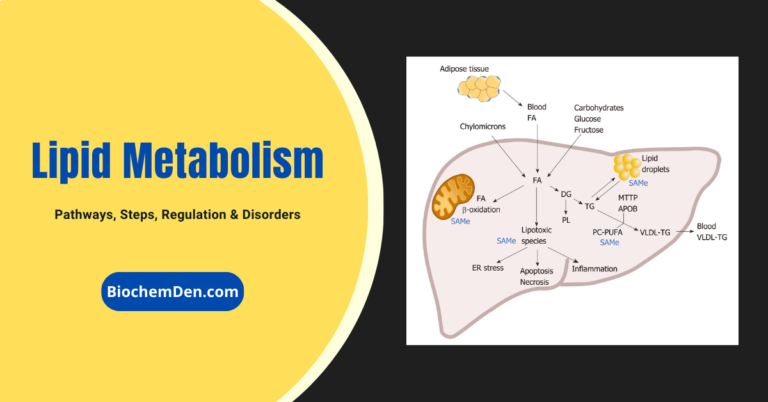
🚀 Continue your journey: Lipid Metabolism: Pathways, Steps, Regulation & Disorders
📖 Go back to the basics: Understanding Biochemistry: A Comprehensive Guide
Discover more from Biochemistry Den
Subscribe to get the latest posts sent to your email.